×
×
The global frozen vegetable market continues to expand rapidly, with frozen cauliflower emerging as one of the most sought-after products among international buyers. Export success in this competitive landscape depends heavily on implementing proper packaging strategies that preserve product quality, ensure food safety, and meet diverse regulatory requirements across different markets. Understanding the critical packaging considerations for frozen cauliflower exports can mean the difference between securing long-term international partnerships and facing costly rejections at destination ports.
Modern frozen cauliflower packaging must address multiple challenges simultaneously, including temperature maintenance during extended shipping periods, moisture control to prevent ice crystal formation, and protection against physical damage during handling. Export-oriented producers must also consider how their packaging choices impact shelf life, product presentation, and compliance with international food safety standards. The complexity of these requirements has led many successful exporters to invest significantly in specialized packaging technologies and quality control systems.
Effective packaging strategies for frozen cauliflower exports require careful consideration of material selection, design optimization, and supply chain logistics. Each element of the packaging system plays a crucial role in maintaining product integrity from processing facility to end consumer. Export companies that master these packaging fundamentals typically achieve higher customer satisfaction rates, reduced product losses, and stronger market positioning in competitive international markets.
Maintaining consistent sub-zero temperatures throughout the export journey represents the most critical packaging requirement for frozen cauliflower shipments. Advanced insulation materials such as vacuum-insulated panels and reflective barrier films provide superior thermal protection compared to traditional foam packaging. These materials help prevent temperature fluctuations that can cause quality degradation, texture changes, and reduced shelf life in frozen cauliflower products.
Exporters must select insulation systems that can withstand the specific temperature variations encountered during international shipping routes. Extended sea freight journeys, airport delays, and customs inspections all present risks to temperature integrity. High-performance insulation packaging for frozen cauliflower typically includes multiple barrier layers, each designed to address different thermal challenges encountered during export transportation.
Cold chain monitoring technology integrated into packaging systems allows exporters to track temperature exposure throughout shipping. Digital data loggers and temperature indicators provide documented proof of proper handling, which many international buyers now require for frozen cauliflower imports. This documentation becomes particularly important when dealing with premium markets that demand strict quality assurance protocols.
Phase change materials represent an innovative approach to maintaining stable temperatures during frozen cauliflower export transportation. These substances absorb and release thermal energy during melting and solidification processes, creating natural temperature buffering effects that protect against thermal shock. Incorporating phase change materials into packaging systems helps maintain optimal storage conditions even when external temperatures fluctuate significantly.
Strategic placement of phase change materials within frozen cauliflower packaging requires careful engineering to maximize thermal protection while minimizing additional weight and bulk. Many exporters use custom-designed phase change material packs positioned at critical points around product containers. This approach provides targeted temperature control where it matters most while maintaining cost-effective shipping weights.
The selection of appropriate phase change materials depends on specific export routes, seasonal temperature variations, and transportation duration. Materials with transition temperatures slightly below optimal frozen cauliflower storage temperatures provide the best protection against temperature excursions. Proper calibration ensures that phase change materials activate only when needed, conserving their thermal capacity for genuine temperature emergencies.
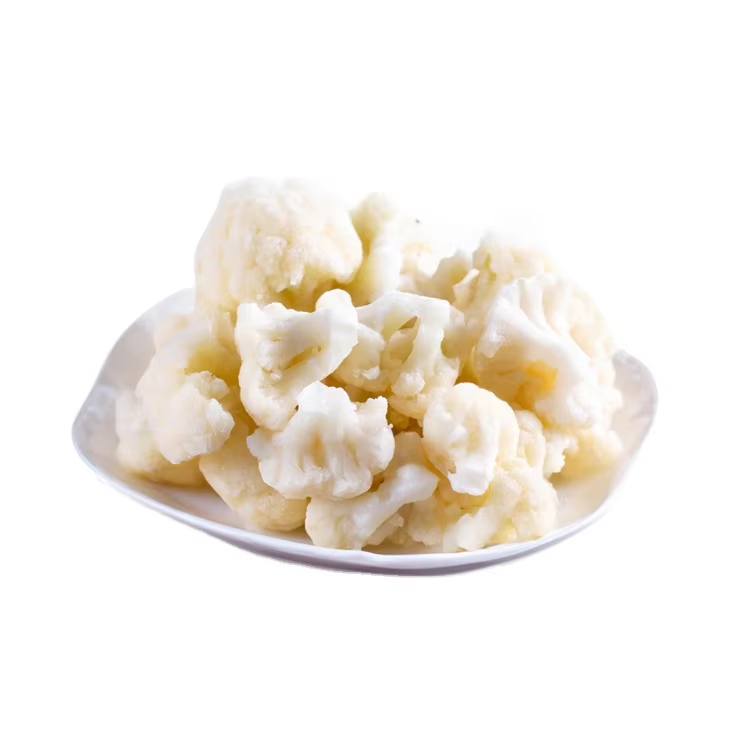
Controlling moisture migration represents another fundamental packaging challenge for frozen cauliflower exporters. Effective vapor barrier materials prevent moisture loss from the product while blocking external humidity that could cause ice crystal formation and freezer burn. Advanced polymer films with specific permeability characteristics provide optimal moisture protection without compromising other packaging performance requirements.
Multi-layer barrier films offer superior protection compared to single-layer alternatives for frozen cauliflower packaging applications. These sophisticated materials typically combine different polymer types, each contributing specific barrier properties such as moisture resistance, oxygen exclusion, and mechanical strength. The resulting composite structure provides comprehensive protection against multiple environmental factors that could compromise product quality during export.
Proper sealing techniques become crucial when implementing vapor barrier packaging for frozen cauliflower exports. Heat sealing, ultrasonic welding, and adhesive bonding methods each offer different advantages depending on packaging materials and production requirements. Consistent seal integrity prevents moisture infiltration that could lead to quality degradation during extended shipping periods.
Incorporating desiccant materials into frozen cauliflower packaging systems provides additional moisture control beyond barrier film protection. Silica gel, molecular sieves, and clay-based desiccants can absorb residual moisture within sealed packages, preventing ice crystal formation and maintaining optimal product texture. Proper desiccant selection requires consideration of absorption capacity, temperature stability, and food safety regulations.
Strategic placement of desiccant packets within frozen cauliflower packaging ensures maximum effectiveness without interfering with product presentation or handling. Many exporters use perforated dividers or dedicated desiccant chambers that keep moisture absorbers separate from direct food contact while maintaining their protective function. This approach satisfies food safety requirements while providing necessary humidity control.
Calculating appropriate desiccant quantities requires understanding of packaging volume, expected moisture loads, and transportation duration for frozen cauliflower exports. Insufficient desiccant capacity fails to provide adequate protection, while excessive amounts waste resources and increase packaging costs. Professional packaging engineers can optimize desiccant systems based on specific export requirements and quality objectives.
International shipping exposes frozen cauliflower packages to significant mechanical stresses including drops, impacts, vibration, and compression forces. Protective packaging must safeguard product integrity while withstanding rough handling during loading, transit, and unloading operations. Advanced cushioning materials and structural design techniques help minimize physical damage that could compromise product quality or package integrity.
Engineered foam systems provide excellent impact protection for frozen cauliflower packaging applications. Closed-cell foams resist moisture absorption while offering superior cushioning performance compared to traditional materials. Custom-molded foam inserts can be designed to hold frozen cauliflower packages securely while providing targeted protection at vulnerable points such as corners and edges.
Corrugated cardboard structures remain popular for frozen cauliflower export packaging due to their excellent strength-to-weight ratios and recyclability. However, standard corrugated materials may not provide adequate performance in frozen applications where moisture resistance becomes critical. Specialized moisture-resistant corrugated materials and protective coatings address these challenges while maintaining structural advantages.
Frozen cauliflower packages must maintain structural integrity when stacked in shipping containers, warehouse storage, and retail environments. Compression testing ensures that packaging can support specified loads without crushing or deforming. Many export markets have specific stacking requirements that packaging must satisfy to qualify for import approval.
Edge crush strength testing provides valuable data about packaging performance under compression loads typical in frozen cauliflower export applications. This testing simulates real-world stacking conditions and helps identify optimal packaging designs for specific load requirements. Regular testing throughout the packaging development process ensures consistent performance across production batches.
Reinforcement techniques such as corner posts, edge protectors, and internal support structures can significantly improve compression resistance for frozen cauliflower packaging. These elements distribute loads more effectively and prevent localized stress concentrations that could lead to package failure. Strategic reinforcement adds minimal cost while providing substantial protection improvements.
Different international markets maintain varying food safety standards that directly impact packaging requirements for frozen cauliflower exports. Understanding and complying with these regulations prevents costly delays, rejections, and market access restrictions. Many countries require specific packaging materials, labeling formats, and documentation to accompany frozen vegetable imports.
HACCP principles must be integrated into frozen cauliflower packaging processes to ensure consistent food safety outcomes. This includes controlling potential contamination sources, maintaining proper sanitation procedures, and documenting critical control points throughout packaging operations. Many international buyers require suppliers to demonstrate HACCP compliance through certified packaging processes.
Material safety certifications become increasingly important as regulatory scrutiny intensifies for frozen cauliflower imports. Food-grade material certificates, migration testing results, and compliance statements provide necessary documentation for customs clearance. Maintaining current certification records and working with certified material suppliers helps ensure smooth export processes.
International labeling requirements for frozen cauliflower exports vary significantly between markets, creating complex compliance challenges for exporters. Language requirements, nutritional information formats, allergen declarations, and country-of-origin statements must align with destination market regulations. Packaging designs must accommodate these diverse labeling needs without compromising functionality or cost-effectiveness.
Traceability information becomes increasingly important for frozen cauliflower exports as food safety awareness grows globally. Batch codes, production dates, and source identification must be clearly presented on packaging in formats that facilitate rapid product tracking. Many buyers now require detailed traceability documentation as a condition of purchase contracts.
Barcode standards and scanning compatibility ensure that frozen cauliflower packages integrate smoothly with international supply chain systems. GS1 standards provide global compatibility while enabling automated inventory tracking and product identification. Proper barcode placement and print quality prevent scanning issues that could delay shipments or create handling problems.
Balancing packaging performance with cost considerations requires careful analysis of material options, supplier relationships, and volume requirements for frozen cauliflower exports. Premium packaging materials may justify higher costs through reduced product losses, improved customer satisfaction, and access to higher-value markets. Economic analysis should consider total cost of ownership rather than simple material acquisition costs.
Supply chain optimization can significantly impact packaging costs for frozen cauliflower exporters. Local sourcing reduces transportation costs and lead times but may limit material options or quality standards. International sourcing provides access to specialized materials and competitive pricing but introduces additional complexity and risk factors that must be carefully managed.
Volume consolidation strategies help frozen cauliflower exporters achieve better packaging material pricing through economies of scale. Coordinating procurement across multiple product lines or partnering with other exporters can justify minimum order quantities for premium packaging materials. However, inventory management becomes more complex when dealing with larger material quantities.
Environmental considerations increasingly influence packaging decisions for frozen cauliflower exports as sustainability awareness grows among international buyers. Recyclable materials, renewable content, and reduced packaging volumes help exporters meet evolving environmental expectations while maintaining product protection requirements. Many premium markets now prefer suppliers who demonstrate environmental responsibility through packaging choices.
Life cycle assessment provides comprehensive evaluation of environmental impacts associated with different packaging options for frozen cauliflower exports. This analysis considers material production, transportation, use phase performance, and end-of-life disposal impacts. Understanding these factors helps exporters make informed decisions that balance performance requirements with environmental responsibility.
Biodegradable and compostable packaging materials offer potential environmental benefits but may present performance limitations for frozen cauliflower applications. Moisture resistance, temperature stability, and barrier properties of sustainable materials continue improving but may not yet match conventional packaging performance. Careful evaluation ensures that environmental benefits do not compromise product quality or safety.
Comprehensive testing protocols ensure that frozen cauliflower packaging performs reliably under real-world export conditions. Accelerated aging tests simulate extended storage periods while thermal cycling tests evaluate performance under temperature variations typical during international shipping. These validation procedures identify potential failure modes before products reach international markets.
Drop testing protocols simulate handling stresses encountered during frozen cauliflower export transportation. Different drop heights, orientations, and surfaces help identify packaging vulnerabilities and optimize protective design elements. Regular testing throughout production ensures consistent performance and identifies any quality variations that could impact export success.
Shelf life validation studies demonstrate how packaging choices impact frozen cauliflower quality retention over time. These studies typically evaluate multiple storage conditions, packaging configurations, and product formulations to optimize overall system performance. Results provide valuable data for establishing proper storage recommendations and shelf life claims.
Establishing feedback mechanisms with international customers provides valuable insights into packaging performance for frozen cauliflower exports. Customer surveys, quality reports, and complaint analysis help identify improvement opportunities and validate packaging effectiveness. This information guides ongoing development efforts and helps prioritize enhancement investments.
Statistical process control methods help monitor packaging quality consistency for frozen cauliflower export operations. Control charts, capability studies, and trend analysis identify process variations before they impact product quality or customer satisfaction. Proactive quality management prevents issues rather than simply responding to problems after they occur.
Benchmarking against competitor packaging approaches provides insights into industry best practices for frozen cauliflower exports. Market analysis, reverse engineering studies, and performance comparisons help identify opportunities for differentiation or improvement. However, copying competitor approaches without understanding underlying requirements may not achieve desired results.
Frozen cauliflower must be maintained at temperatures of -18°C (0°F) or below throughout the entire export journey to preserve quality, texture, and nutritional value. Temperature fluctuations above -15°C can cause ice crystal formation, freezer burn, and significant quality degradation. Export packaging systems should be designed to maintain these temperatures even during temporary power outages, equipment failures, or extended customs delays. Many international buyers require documented proof of proper temperature maintenance through data logging systems integrated into packaging solutions.
Moisture barrier requirements vary significantly depending on destination climate conditions, shipping duration, and local regulatory standards. Tropical markets typically require superior vapor barriers due to high humidity environments that increase condensation risks. European markets often specify particular barrier material types and permeability rates, while some Asian markets focus more on preventing ice crystal formation during extended sea freight journeys. Exporters must research specific market requirements and design packaging systems that exceed minimum standards to ensure consistent product quality across diverse international destinations.
Comprehensive packaging validation for frozen cauliflower exports should include thermal performance testing, drop testing, compression testing, and accelerated aging studies. Thermal testing evaluates insulation effectiveness and temperature maintenance under various conditions. Drop testing simulates handling stresses during shipping and identifies structural vulnerabilities. Compression testing ensures packages can withstand stacking loads in containers and warehouses. Accelerated aging studies predict long-term performance and shelf life under different storage conditions. Regular testing throughout production maintains quality consistency and identifies potential issues before products reach international customers.
Cost optimization for frozen cauliflower packaging requires analyzing total cost of ownership rather than just material acquisition costs. Higher-performance packaging materials may justify increased costs through reduced product losses, fewer customer complaints, and access to premium markets. Exporters should consider volume consolidation strategies, supplier partnerships, and standardized packaging designs to achieve economies of scale. Regular cost-benefit analysis helps identify optimal balance points between packaging investment and overall profitability. Working with experienced packaging engineers can identify cost-effective solutions that meet performance requirements without unnecessary over-engineering.
 Hot News
2026-05-29
2026-05-27
2026-05-26
2026-05-22
2026-05-20
2026-05-20
WYL Foods specializes in high-quality frozen food production, offering a wide range of safe, nutritious, and delicious products. As a trusted global supplier, we ensure consistent quality, fast delivery, and customized solutions for retailers and food service providers.
No. 87, Fuzhou South Road, Shinan District, Qingdao City, Shandong Province, Room 2201
Copyright © 2026 Qingdao Wyl Imp. & Exp. Co., Ltd. All rights reserved. Privacy Policy

 EN
EN