×
×
The food service industry faces constant pressure to balance quality, efficiency, and cost-effectiveness when selecting ingredients for bulk preparation. Frozen sweet potato fries have emerged as a game-changing solution for restaurants, cafeterias, and food service operations seeking to optimize their operations without compromising on taste or nutritional value. These pre-processed alternatives offer significant advantages over fresh sweet potatoes, particularly in high-volume environments where consistency and speed are paramount.
Understanding the operational benefits of frozen sweet potato fries requires examining their impact on kitchen workflow, storage requirements, and overall cost management. Professional kitchens that make the switch often discover that these frozen alternatives streamline their processes while maintaining the beloved flavor profile that customers expect. The convenience factor alone makes them an attractive option for busy establishments looking to serve high-quality sweet potato dishes without the labor-intensive preparation traditionally required.
Frozen sweet potato fries eliminate the time-consuming processes associated with fresh sweet potato preparation in commercial kitchens. Traditional preparation involves washing, peeling, cutting, and pre-cooking steps that can consume several hours of staff time per batch. Professional kitchens utilizing frozen varieties can redirect this labor toward other value-added activities, improving overall operational efficiency and reducing bottlenecks during peak service periods.
The consistency of cut size and shape in frozen sweet potato fries ensures uniform cooking times and presentation standards across all orders. This standardization reduces training requirements for kitchen staff and minimizes the risk of inconsistent portion sizes or cooking results. Food service managers appreciate the predictability that comes with using pre-processed products, as it allows for more accurate timing and resource allocation during busy service periods.
Labor costs represent a significant portion of food service operating expenses, making efficiency improvements particularly valuable for profit margins. Frozen sweet potato fries require minimal preparation skills compared to processing fresh sweet potatoes from scratch. New employees can quickly learn proper handling and cooking techniques, reducing training time and associated costs while maintaining consistent output quality.
The simplified preparation process also reduces the need for specialized knife skills and sweet potato handling expertise. Kitchen staff can focus on cooking techniques rather than time-intensive prep work, allowing restaurants to operate with leaner staffing levels during certain shifts. This efficiency gain becomes particularly important during labor shortages or when managing high-volume orders that would otherwise strain kitchen capabilities.
Fresh sweet potatoes have a relatively short shelf life and require specific storage conditions to maintain quality, often leading to spoilage and waste in commercial kitchens. Frozen sweet potato fries offer extended storage capabilities, typically maintaining quality for months when properly stored in commercial freezers. This extended shelf life allows food service operations to purchase in larger quantities, securing better pricing while reducing the frequency of deliveries and associated handling costs.
Waste reduction becomes a significant cost factor when comparing frozen versus fresh options. Fresh sweet potatoes can develop soft spots, sprouts, or other quality issues that render them unusable, while properly stored frozen alternatives maintain consistent quality throughout their storage period. The ability to use portions as needed without worrying about rapid deterioration helps food service operations better control food costs and minimize inventory losses.
Commercial freezer space typically offers better space utilization compared to the storage requirements for fresh sweet potatoes. Frozen sweet potato fries can be stacked efficiently in freezers, maximizing storage density and allowing restaurants to maintain larger inventories in smaller spaces. This space efficiency becomes crucial for establishments with limited storage areas or those looking to optimize their real estate usage.
The standardized packaging of frozen sweet potato fries also simplifies inventory management and rotation procedures. Clear labeling and uniform package sizes make it easier for staff to monitor stock levels, implement first-in-first-out rotation systems, and conduct accurate inventory counts. These operational improvements contribute to better cost control and reduce the administrative burden associated with inventory management.
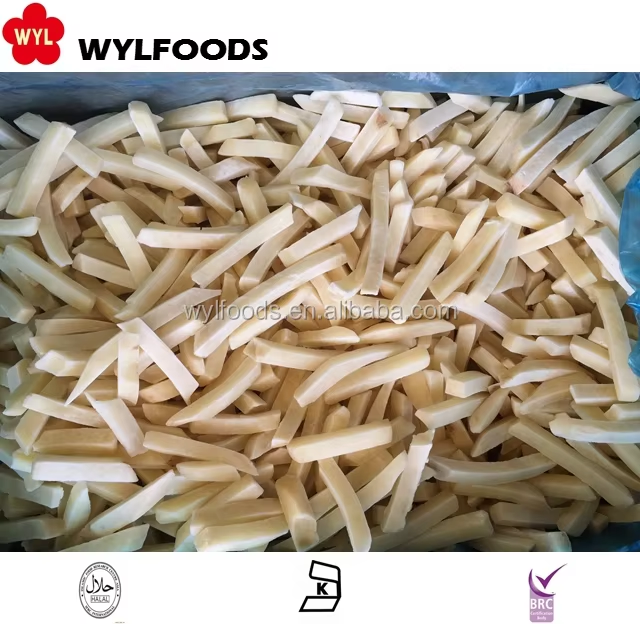
Commercial producers of frozen sweet potato fries implement rigorous quality control measures throughout their processing operations, ensuring consistent size, color, and texture across all batches. This industrial-level quality control is difficult to replicate in individual restaurant kitchens when processing fresh sweet potatoes. The standardization extends to nutritional content, cooking characteristics, and final presentation, allowing restaurants to deliver consistent experiences to their customers regardless of seasonal variations or supplier changes.
The blanching and freezing processes used in commercial production help preserve the natural sweetness and nutritional profile of sweet potatoes while creating products that cook evenly and consistently. Professional processing techniques often result in better texture retention compared to fresh sweet potatoes that may become mushy or unevenly cooked when prepared in high-volume settings. This consistency factor becomes particularly important for chain restaurants or franchises that require standardized menu items across multiple locations.
Frozen sweet potato fries undergo commercial processing that includes food safety measures such as washing, sanitization, and rapid freezing that help eliminate potential foodborne pathogens. This industrial processing creates an additional layer of food safety protection compared to fresh sweet potatoes that require thorough cleaning and proper handling in individual kitchens. The controlled processing environment reduces the risk of cross-contamination and ensures compliance with food safety regulations.
The frozen storage requirements also create an inhospitable environment for bacterial growth, providing an inherent safety advantage over fresh produce that can harbor harmful microorganisms if not properly stored or handled. Food service operations benefit from reduced liability risks and simplified HACCP compliance when incorporating properly processed frozen sweet potato fries into their menus. The traceability provided by commercial processors also supports food safety investigations if issues arise.
While the unit price of frozen sweet potato fries may appear higher than fresh sweet potatoes, a comprehensive cost analysis reveals significant savings when factoring in labor, waste reduction, and operational efficiency gains. The elimination of prep time, reduced waste percentages, and consistent portion control contribute to lower total costs per serving. Professional kitchens often discover that their actual cost per plate decreases when switching to frozen alternatives despite higher ingredient costs.
Energy costs also factor into the total cost equation, as frozen sweet potato fries typically require less cooking time and energy compared to preparing fresh sweet potatoes from raw state. The reduced cooking time improves kitchen throughput during peak periods, allowing establishments to serve more customers with existing equipment capacity. These operational efficiencies translate directly into improved profit margins and better resource utilization.
Fresh sweet potato prices fluctuate significantly based on seasonal availability, weather conditions, and market demand, making it challenging for restaurants to maintain consistent food costs and menu pricing. Frozen sweet potato fries offer more stable pricing structures that facilitate better budget planning and cost control. Food service managers can negotiate long-term supply contracts with frozen suppliers, securing predictable costs that support accurate financial forecasting and menu pricing strategies.
The price stability of frozen options also reduces the need for frequent menu repricing or absorption of unexpected cost increases. Restaurants can maintain consistent profitability margins without passing unpredictable cost fluctuations onto customers. This pricing predictability becomes particularly valuable for contract food service operations that work within fixed budget constraints or establishments with printed menus that cannot easily accommodate frequent price changes.
Modern freezing techniques used in commercial processing help preserve the nutritional content of sweet potatoes, including vitamins, minerals, and antioxidants that make them valuable menu additions. The rapid freezing process locks in nutrients at peak freshness levels, often resulting in higher retained nutritional value compared to fresh sweet potatoes that may lose nutrients during extended storage or transport. This nutritional preservation supports restaurants offering health-conscious menu options without compromising on ingredient quality.
The controlled processing environment also ensures consistent nutritional profiles across batches, allowing food service operations to provide accurate nutritional information to customers. This consistency becomes important for establishments serving customers with specific dietary requirements or those participating in nutrition labeling programs. The standardized nutritional content of frozen sweet potato fries supports menu planning for institutions like schools or healthcare facilities that must meet specific nutritional guidelines.
Commercial processing of frozen sweet potato fries includes optimization techniques that enhance texture and flavor characteristics during final preparation. The pre-blanching process helps maintain structural integrity during cooking, resulting in crispy exteriors and fluffy interiors that customers expect from quality sweet potato fries. Professional processing often produces superior texture results compared to fresh sweet potatoes processed in individual restaurants under varying conditions.
Flavor concentration and consistency also benefit from controlled processing environments where variables like cooking temperature and timing can be precisely managed. The result is frozen sweet potato fries that deliver consistent taste experiences regardless of preparation variations in individual restaurants. This flavor reliability helps establishments build customer loyalty and maintain menu item quality standards across different locations or shifts.
Fresh sweet potato availability varies significantly based on growing seasons, weather conditions, and regional agricultural factors, creating potential supply disruptions for restaurants dependent on consistent menu offerings. Frozen sweet potato fries provide supply chain stability through year-round availability and multiple sourcing options from different processors and geographic regions. This supply security allows restaurants to maintain menu consistency without seasonal interruptions or forced substitutions.
The extended shelf life of frozen products also provides buffer inventory that helps restaurants weather temporary supply disruptions or unexpected demand spikes. Food service operations can maintain strategic inventory levels that protect against stockouts while taking advantage of bulk purchasing opportunities. This supply chain flexibility becomes particularly valuable for establishments in remote locations or those with limited access to fresh produce suppliers.
Frozen sweet potato fries benefit from established cold chain distribution networks that efficiently serve food service customers across wide geographic areas. The standardized packaging and palletization of frozen products optimize transportation efficiency, reducing per-unit shipping costs compared to fresh produce that requires specialized handling and faster delivery timelines. These logistics advantages contribute to overall cost savings and improved supply reliability.
Distribution efficiency also extends to delivery frequency and ordering flexibility. Restaurants can establish efficient delivery schedules with frozen suppliers, often receiving multiple products in single deliveries that reduce receiving labor and administrative overhead. The flexibility to order larger quantities less frequently helps optimize cash flow management while ensuring adequate inventory levels for consistent operations.
The extended shelf life and precise portioning capabilities of frozen sweet potato fries contribute to significant reductions in food waste compared to fresh alternatives. Commercial processing utilizes whole sweet potatoes efficiently, including portions that might be discarded in restaurant prep operations due to shape irregularities or size variations. This comprehensive utilization supports sustainability goals while reducing the environmental impact associated with food waste disposal.
Resource optimization extends beyond waste reduction to include water and energy usage in commercial processing facilities that can achieve economies of scale not possible in individual restaurants. Large-scale processing operations typically implement advanced water recycling and energy-efficient systems that reduce the overall environmental footprint per serving compared to distributed processing in multiple restaurant locations. These efficiency gains support corporate sustainability initiatives and environmental responsibility programs.
The density and stability of frozen sweet potato fries enable more efficient transportation compared to fresh sweet potatoes that require careful handling and climate-controlled transport. Frozen products can be consolidated into fewer shipments with higher payload efficiency, reducing the carbon footprint associated with distribution. The ability to ship longer distances without quality degradation also opens opportunities for restaurants to source from more sustainable or cost-effective producers.
Cold chain distribution networks for frozen foods often operate with higher efficiency levels compared to fresh produce distribution systems that must balance speed against product deterioration. The reduced urgency in frozen product delivery allows transportation companies to optimize routes and consolidate shipments more effectively. These logistics improvements contribute to overall sustainability goals while supporting cost reduction objectives for food service operations.
Frozen sweet potato fries typically cook 30-50% faster than fresh sweet potatoes since they have been pre-blanched during processing. Most frozen varieties require 12-18 minutes in a standard fryer compared to 20-30 minutes for fresh sweet potato fries prepared from scratch. This time savings becomes significant in high-volume operations where speed of service directly impacts customer satisfaction and operational efficiency.
Frozen sweet potato fries should be stored at 0°F (-18°C) or below to maintain optimal quality and safety standards. Commercial freezers should be monitored regularly to ensure consistent temperatures, as temperature fluctuations can affect texture and increase the risk of freezer burn. Proper storage conditions can maintain quality for 12-18 months, making them an excellent option for bulk purchasing and inventory management.
Yes, frozen sweet potato fries are versatile and can be prepared using various cooking methods including deep frying, oven baking, air frying, and convection cooking. Each method produces slightly different texture results, allowing restaurants to choose preparation techniques that best match their equipment capabilities and desired final product characteristics. Cooking instructions may vary slightly between methods, but the convenience factor remains consistent across all preparation options.
While frozen sweet potato fries may have higher initial ingredient costs, the total cost per portion typically favors frozen options when factoring in labor savings, waste reduction, and consistent yield. Fresh sweet potatoes require significant labor for washing, peeling, and cutting, plus have higher waste percentages from unusable portions. Most food service operations find that frozen alternatives provide 15-25% lower total cost per serving when all factors are considered in comprehensive cost analysis.
 Hot News
2026-05-29
2026-05-27
2026-05-26
2026-05-22
2026-05-20
2026-05-20
WYL Foods specializes in high-quality frozen food production, offering a wide range of safe, nutritious, and delicious products. As a trusted global supplier, we ensure consistent quality, fast delivery, and customized solutions for retailers and food service providers.
No. 87, Fuzhou South Road, Shinan District, Qingdao City, Shandong Province, Room 2201
Copyright © 2026 Qingdao Wyl Imp. & Exp. Co., Ltd. All rights reserved. Privacy Policy

 EN
EN